

If you are evaluating AI SEO software for a team purchase, you are probably drowning in interchangeable marketing pages. Every vendor calls itself "AI-powered." Every demo shows a chat box generating a meta description. And procurement wants a clear answer to a simple question: what is the best AI software for SEO for our stack, our CMS, and our budget?
This buyer's guide is written for that decision — not for hobbyists comparing free Chrome extensions. We cover what AI SEO software actually means in 2026, how to evaluate before signing an annual contract, the best AI SEO software by category, and where generative AI SEO software fits (and where it does not).
Last updated: July 7, 2026.
Tool vs. software vs. platform vs. agent
The market uses these words interchangeably. For buying purposes:
| Term | What buyers usually mean |
|---|---|
| AI SEO tool | A single-purpose product (keyword tool, content scorer, audit crawler) |
| AI SEO software | A licensed product with seats, billing, and support — may be a suite |
| AI SEO platform | Multi-module system spanning research, content, and reporting |
| AI SEO agent | Software that executes workflows autonomously with human approval |
This guide uses AI SEO software as the umbrella term. When we say best AI software for SEO, we mean products worth a line item on your marketing budget.
What AI SEO software actually means in 2026
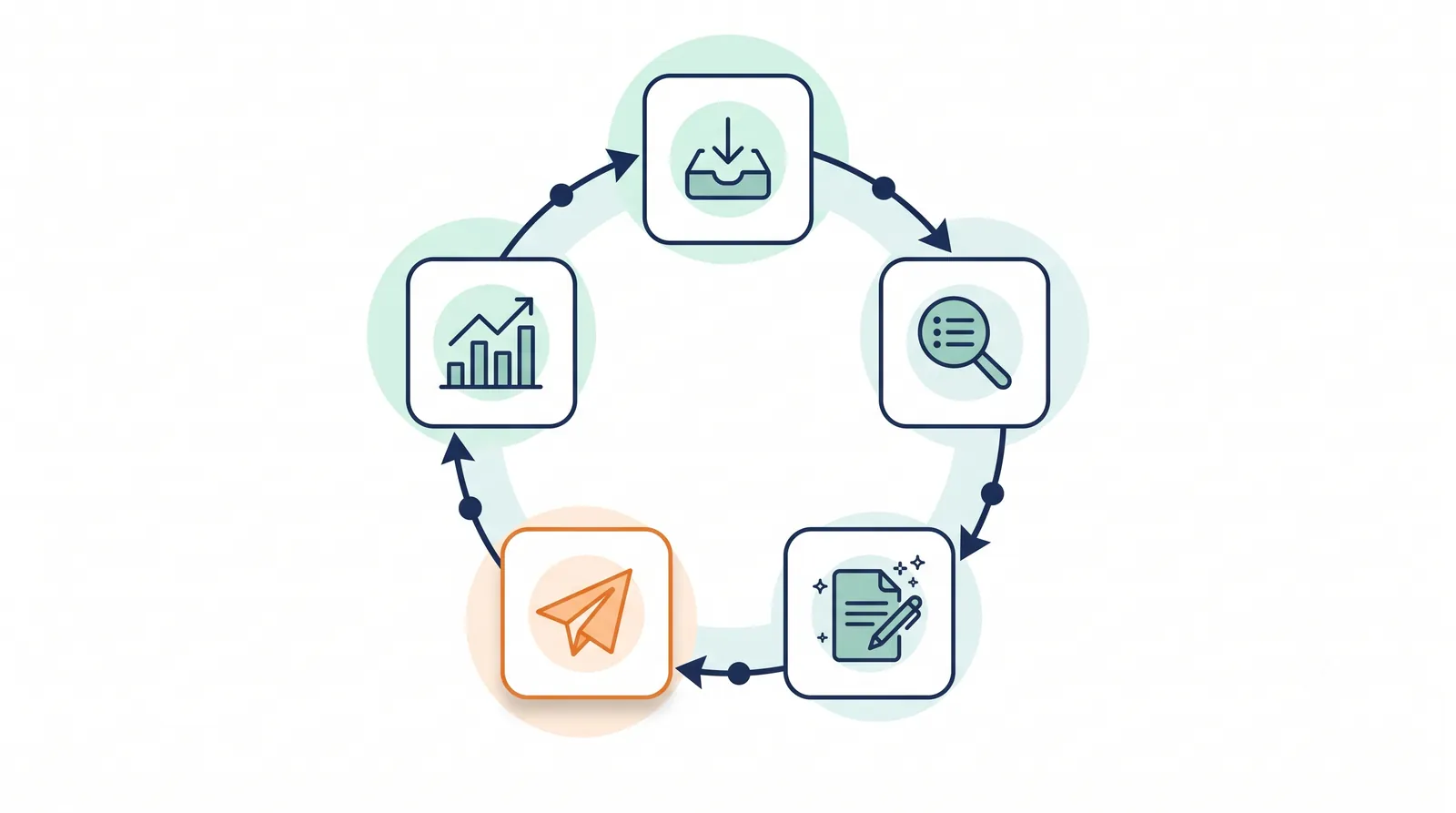
The category has five functional layers. Most products dominate one layer and bolt on others.
1. Research software — Keyword databases, competitor analysis, SERP feature tracking, backlink indexes. AI adds natural-language querying and automated briefs. Examples: Ahrefs, Semrush, Moz.
2. Content and writing software — SERP-aware editors, AI outlines, draft generation, content scoring. Examples: Surfer, Clearscope, Frase, MarketMuse.
3. Technical audit software — Crawlers, Core Web Vitals monitors, schema validators, log analyzers. AI adds prioritization and plain-English explanations. Examples: Sitebulb, Screaming Frog (with AI plugins), Semrush Site Audit.
4. All-in-one suites — Research + content + audit + reporting in one subscription. AI features layered across modules. Examples: Semrush, Ahrefs, Search Atlas.
5. Agentic software — Connects to GSC and your CMS, finds opportunities, drafts fixes, ships after approval. Examples: RankHive, NightOwl, Writesonic SEO Agent.
The mistake buyers make: purchasing research software when the bottleneck is execution, or purchasing generative writing software when the bottleneck is technical SEO.
How to evaluate AI SEO software before buying
Use this checklist in every vendor evaluation. Score each item yes/no.
Integration
- [ ] Connects to Google Search Console with read access
- [ ] Connects to your CMS (WordPress plugin, API, or webhook)
- [ ] Exports to your content workflow (Google Docs, Notion, etc.)
Human controls
- [ ] Changes require explicit approval before publishing
- [ ] Full audit log of what changed, when, and by whom
- [ ] One-click rollback on shipped changes
Data quality
- [ ] Keyword volume from a real database, not LLM hallucination
- [ ] SERP data refreshed within 30 days
- [ ] Transparent about data sources and refresh cadence
Reporting
- [ ] Ties recommendations to your site's actual performance data
- [ ] Shows before/after for shipped changes
- [ ] Exportable for stakeholder reviews
Commercial terms
- [ ] Published pricing (or clear quote without a 45-minute sales call)
- [ ] Month-to-month option or pro-rated cancellation
- [ ] Per-site vs. per-seat pricing matches your growth plan
Security
- [ ] SOC 2 or equivalent for enterprise buyers
- [ ] Clear data retention and deletion policy
- [ ] OAuth scopes documented (what access the software requests)
If a product fails the approval-workflow and audit-log items, treat it as a recommendation engine, not execution software — regardless of what the homepage claims.
Best AI SEO software by category
All-in-one suites
Ahrefs — Best AI SEO software for data depth
- AI SEO software strengths: Largest backlink index, AI Content Helper, AI Overview tracking, natural-language queries across the product.
- Best for: SEO teams that live in keyword and link data.
- Pricing tier: High ($100–$1,000+/mo).
- Gap: Does not ship changes to your site. Insights stay in Ahrefs until your team acts.
Semrush — Best AI SEO software for cross-channel teams
- Strengths: SEO + content (ContentShake AI) + paid + social in one platform. Strong Site Audit with AI prioritization.
- Best for: Marketing departments that report SEO alongside other channels.
- Pricing tier: High.
- Gap: Feature breadth can mean shallow depth on execution. Enterprise sales motion.
Search Atlas (SEO.com) — Best AI-native suite
- Strengths: AI-first workflows, automated audits, content generation, rank tracking in one package.
- Best for: Buyers who want an AI-heavy platform without assembling a stack.
- Pricing tier: Mid.
- Gap: Newer than Ahrefs/Semrush. Verify data accuracy against a second source during trial.
Content and writing software
SurferSEO — Best generative-adjacent writing software
- Real-time SERP analysis while you write. AI outline and draft features are solid; the editor is the product.
- Does not replace technical SEO software. Pairs well with an execution agent.
Clearscope — Best for editorial quality
- Premium content optimization for teams that prioritize quality over volume.
- Enterprise pricing. Worth it when content is your primary growth channel.
Frase.io — Best for freelancers and small content teams
- Briefs, outlines, and drafts at a lower price point than Surfer or Clearscope.
- Good AI software for SEO content workflows; limited technical execution.
Technical and on-page software
Sitebulb — Best technical crawl software
- Visual audits, prioritized issue lists, JavaScript rendering. AI-assisted explanations of crawl findings.
- Outputs recommendations; your team implements.
RankHive — Best agentic AI SEO software for WordPress
- Not a crawl-everything dashboard — an execution system. Reads GSC, drafts on-page fixes, ships after approval.
- Best AI SEO software pick when your bottleneck is "we know what to fix but nothing gets done."
- Striking-distance workflow targets keywords in positions 4–20 — highest ROI per hour for established sites.
- Weekly queue replaces the spreadsheet of recommendations. Approval gate on every change.
- WooCommerce product and category pages supported alongside standard posts and pages.
- Agency mode: multiple sites, isolated credentials, client-ready change logs.
- Works with SEO plugins (Rank Math, Yoast) — executes on top of their meta fields.
- See AI SEO Agent for WordPress.
NightOwl, Search Atlas Otto — evaluate if you need multi-CMS support; verify WordPress write depth in trial before annual contract.
Enterprise-grade software
MarketMuse — Best for content strategy at scale
- Topic authority modeling, content planning, competitive gap analysis.
- Enterprise contracts. Overkill for sites under 200 pages.
- When to buy: You publish 20+ long-form pieces per month and need editorial planning across topic clusters.
- When to skip: SMB sites where execution (titles, metas, schema) matters more than content strategy decks.
BrightEdge (and similar enterprise platforms) — Best for Fortune 500 SEO programs
- Full-platform SEO with AI insights, stakeholder reporting, and integration teams.
- Pricing requires sales conversation. Not for SMBs.
- Strength: Executive reporting and multi-market rollouts.
- Gap: Implementation still requires internal teams or agencies; platform does not ship WordPress fixes.
Generative AI SEO software: what's different
Generative AI SEO software is a subcategory where the core output is text — blog posts, product descriptions, meta variations — produced by large language models with SEO templates layered on top.
Examples: Jasper SEO mode, Copy.ai workflows, Writesonic article generator, Semrush ContentShake.
What generative software does well:
- Produce first drafts fast
- Generate meta title and description variations at scale
- Create outline structures from a target keyword
What generative software does poorly without help:
- Ship schema markup to your live site
- Fix internal link graphs
- Prioritize by your GSC data (vs. generic keyword databases)
- Guarantee factual accuracy without human review
The risk: Teams buy generative AI SEO software, publish 50 AI drafts without editing, and wonder why traffic flatlined. Generative software is a drafting accelerator, not a ranking guarantee.
Pair generative tools with an editor, a fact-check step, and an execution layer (RankHive for on-page elements on existing pages). For the broader generative search landscape, see Generative Engine Optimization.
Pricing breakdown
| Software category | Typical monthly cost | Annual contract common? |
|---|---|---|
| Agentic (RankHive) | $50–$300/site | Optional |
| Content optimization (Surfer, Frase) | $50–$250 | Often discounted annually |
| All-in-one suite (Ahrefs, Semrush) | $100–$1,000+ | Yes |
| Enterprise (MarketMuse, BrightEdge) | $1,000–$10,000+ | Yes |
| Generative writing (Jasper, Copy.ai) | $50–$200 | Optional |
| Technical audit (Sitebulb) | $35–$150 | Optional |
Stack math for a mid-size WordPress site:
- RankHive (execution) + Ahrefs (research) + Surfer (writing) ≈ $400–$700/mo
- Same site with only RankHive + free GSC ≈ $50–$150/mo
Do not pay for three tools in the same category. One research suite, one content tool, one execution agent is the ceiling for most teams.
Software vs. service: do you need both?
AI SEO software scales sub-linearly — more pages, same subscription (within limits). AI SEO services (agencies) scale linearly — more work, more humans, more cost.
| Situation | Software alone | Service alone | Both |
|---|---|---|---|
| 50-page WordPress site | ✅ Usually enough | Overkill | Optional |
| 2,000-page ecommerce | Agent + audit tool | Strategy consultant | ✅ Common |
| Brand launch / repositioning | ❌ Insufficient | ✅ Needed | Agent for execution |
| Agency managing 20 clients | White-label + agents | Your strategists | ✅ Standard |
Full comparison: AI SEO Service vs. AI SEO Agent and Best AI SEO Services & Agencies.
Procurement checklist for AI SEO software buyers
Use this when presenting options to a CFO or procurement team:
- Problem statement — What bottleneck does this software remove? (research, writing, execution, visibility)
- Integration map — GSC, GA4, CMS, SSO requirements
- Approval workflow — Does it auto-publish? (If yes, escalate risk review.)
- TCO over 12 months — License + implementation hours + training
- Exit plan — Export paths, contract cancellation terms, data portability
- Overlap audit — List existing tools; kill duplicates before adding
Vendor red flags: "AI-powered" with no demo of shipped output; no published SMB pricing; auto-publish without rollback; keyword volume quoted without database sourcing.
Vendor green flags: Live demo on your site; audit log demonstrated; GSC integration in session one; clear separation between recommendations and execution.
RFP questions to send vendors
Copy these into your RFP or vendor comparison spreadsheet:
- Does the product ship changes to our CMS via API, or only export recommendations?
- What approval workflow exists before publish? Can auto-publish be disabled?
- How is rollback implemented? Show us a live revert.
- What data sources power prioritization — our GSC, a keyword database, or both?
- What is the median time from signup to first shippable output on a 100-page site?
- List every integration required and OAuth scopes requested.
- What happens to our data on contract termination?
Five software layers at a glance
| Layer | Examples | Primary output | Typical gap |
|---|---|---|---|
| Research suites | Ahrefs, Semrush, Moz | Keyword/backlink data, audits | Does not ship CMS changes |
| Content optimization | Surfer, Clearscope, Frase | Scored drafts and briefs | Thin existing pages need rewrites |
| Technical audit | Sitebulb, Screaming Frog | Crawl issue backlog | Developer implements tickets |
| Agentic execution | RankHive | Live WordPress changes + audit log | Not a competitor backlink tool |
| Visibility monitors | Profound, Peec, Otterly | AI mention dashboards | Does not change your site |
Buy one product per row unless you have budget and daily roles for each. Overlap between Ahrefs and Semrush is the most common waste; overlap between a monitor and a research suite is the second.
Common mistakes when buying AI SEO software
- Procurement by feature count. More modules ≠ better outcomes. Buy the smallest stack that closes your bottleneck.
- Annual contracts before validation. Month one should produce a shippable result. Annual locks you in before proof.
- Confusing generative drafting with SEO execution. Software that writes blogs is not software that fixes your striking-distance pages.
- No overlap audit. Teams already paying for Semrush add Search Atlas for "AI" — duplicate spend.
- Skipping security review on CMS write access. Any software that publishes to production needs rollback and scope limits documented.
- Buying enterprise tier for a 40-page site. MarketMuse and BrightEdge are powerful; they are also overkill for SMB properties.
12-month TCO example: SMB WordPress site
Stack A — Research-heavy (common mistake):
- Ahrefs $129/mo + Semrush $139/mo (overlap) + Surfer $89/mo = $357/mo
- Implementation: 8 hrs/mo manual at $75/hr = $600/mo labor
- Annual TCO: ~$11,484 with execution still manual
Stack B — Execution-focused (recommended):
- RankHive $99/mo + Ahrefs $129/mo = $228/mo
- Implementation: 2 hrs/mo review/approve at $75/hr = $150/mo labor
- Annual TCO: ~$4,536 with weekly shipped fixes
The cheaper stack often wins on outcomes when the bottleneck was execution, not data.
When Stack B still needs Stack A's research: Add Ahrefs only after RankHive has cleared the first 30 striking-distance URLs and GSC shows new gaps requiring competitor keyword analysis. Sequential buying beats simultaneous overlap.
Procurement tip: Present Stack A vs Stack B to finance. TCO spreadsheets that include labor hours convert faster than feature comparison matrices alone.
Frequently asked questions
What is the best AI software for SEO?
No universal winner. Ahrefs for research depth. Surfer for content. RankHive for WordPress execution. Match software to your bottleneck.
Is AI SEO software worth it for a small team?
Yes, if you pick one execution layer and avoid stacking redundant suites. A $100/mo agent that ships weekly fixes beats a $500/mo dashboard nobody opens.
How is AI SEO software different from an AI SEO tool?
In practice, the words are interchangeable. "Software" implies a licensed product with support and billing; "tool" can mean a single feature or freemium utility.
What is generative AI SEO software?
LLM-based content production tools with SEO templates — Jasper, Copy.ai, ContentShake. Drafting accelerators, not full SEO execution systems.
Can AI SEO software replace an SEO hire?
It can replace repetitive execution (title rewrites, meta updates, schema additions, internal link fixes). It cannot replace strategy, link building relationships, or brand judgment.
Should I buy annual or monthly?
Start monthly. Two weeks of real workflow use tells you more than any demo. Convert to annual only after you have shipped results.
How does best AI for SEO software differ from best AI SEO tools?
Marketing language blurs them. In procurement conversations, "software" implies seats, support SLAs, and integration reviews. "Tools" often means single-purpose products. Evaluate on workflow fit, not naming.
What generative AI SEO software should I avoid?
Products that auto-publish bulk content without review, quote keyword volumes without a database, or promise "page one in 30 days." Generative drafting is fine; unsupervised publishing is not.
Which ai seo software is best for WordPress teams?
RankHive for execution, Rank Math or Yoast for on-page field management, Ahrefs or Semrush for research. Three layers, three jobs — not three dashboards doing the same job.
How long should AI SEO software evaluation take?
Four weeks maximum. Week 1 connect integrations. Week 2 ship one real change. Week 3 measure GSC. Week 4 renew or cancel. Evaluation that stretches to quarter-end without shipped output is procurement theater.
Can I run AI SEO software without an SEO hire?
Yes — if you choose software with approval queues and start with low-risk change types. RankHive is designed for part-time operators. Enterprise suites (BrightEdge, MarketMuse) assume dedicated SEO staff.
What security questions should I ask AI SEO software vendors?
OAuth scopes for GSC, CMS write permissions, data retention on contract end, SOC 2 or equivalent for enterprise, and whether drafts are stored on vendor servers containing unpublished content.
What is the difference between AI SEO software and SEO plugins?
Plugins (Rank Math, Yoast) manage on-page fields and schema templates on WordPress. AI SEO software adds research databases, content scoring, agents, or visibility monitoring. Most WordPress stacks use a plugin plus one or two software layers — not one product for everything.
When should I buy AI SEO software vs hire an agency?
Software when execution volume is high and repetitive (50+ pages, weekly on-page changes). Agency when you need net-new strategy, link building, or brand campaigns. Hybrid is common: agency quarterly, agent weekly. See Best AI SEO Services & Agencies.
Is ai seo software the same as generative AI SEO software?
No. Full ai seo software includes research, audit, agentic, and visibility categories. Generative AI SEO software is a subset focused on LLM drafting — useful, but not a complete stack on its own.
Related reading
- Best AI SEO Tools in 2026
- What's the Best AI Tool for SEO?
- Best AI SEO Services & Agencies
- SEO Automation Software Comparison
- What Is Agentic SEO?
Evaluating AI SEO software for WordPress execution? Try RankHive — agentic software that ships fixes after your approval.