
"AI killed my SEO" is a common complaint from small content sites right now. Pull up Search Console on a site like that and you may well see this: impressions up, clicks flat, rankings on the queries that matter unchanged. What has moved is the layout of the search results page. Many informational queries now have an AI answer sitting on top. Same rank. Less click.
AI did not kill SEO. It changed the surface SEO runs on. It changed the tools we use to do the work. Both shifts are real. Neither is reversible. The teams that figure this out in 2026 will pull ahead of the ones still running their 2022 playbook.
This guide is the long, plain-English answer to the question most people are actually asking when they search for AI for SEO: how does this affect my site, and what do I do about it? It covers how AI search engines work, how Google's AI Overviews change the way pages get traffic, how to use AI software for SEO without producing junk, and a 90-day plan you can follow whether you run a one-person blog or a marketing team of ten.
Every section stands alone. If you only have ten minutes, jump to the section you need. There is a checklist at the end you can run in an hour with no new tools.
Last updated: May 29, 2026. AI in search is moving fast. Anything described here will look a little different in six months. The patterns underneath the changes are what to lock in.
TL;DR. The version for busy people
- AI search is not separate from Google search. It is layered on top. The same content that wins traditional rankings still tends to win in AI surfaces. But the format and structure matter more than they used to.
- Use AI software for SEO to do the boring parts faster. Research, drafting, audits. Not to mass-produce content.
- Optimize content for AI search by writing direct answers in the first sentence of each section, using comparison tables and definition blocks, and being a credible source with consistent entity signals.
- The biggest leverage move in 2026 is automating the recurring SEO loop end-to-end. See How to Automate SEO and What Is Agentic SEO?.
- The biggest risk is auto-publishing AI content. Helpful Content updates have not gotten easier.
- What to do this week is at the bottom of this post. It takes 60 minutes.
Part 1. How AI changed search (the short version)
Three concrete things changed between 2023 and 2026. None of them was a small change. All three are still landing.
1. AI Overviews became a default
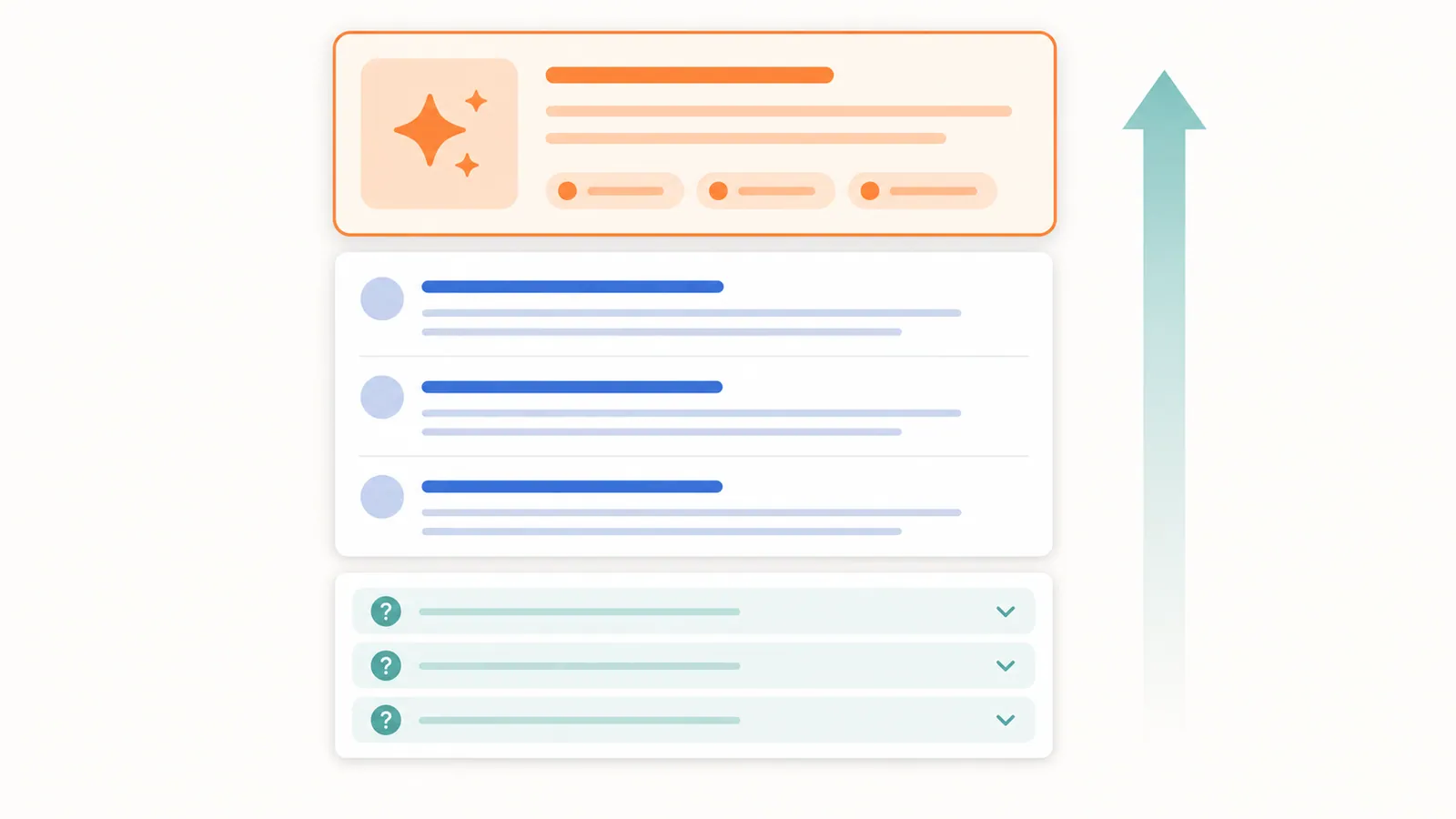
Google's AI Overviews (the feature that started as Search Generative Experience) now show up on a large share of informational queries. When they appear, they sit above the ten blue links. They show a short answer pulled from a handful of sources, with citation links to the right.
The result is simple. For many queries, the first thing a searcher sees is an AI summary. If your page is one of the cited sources, you get a visible mention and sometimes a link click. If it is not, you can still rank in the blue links, but you will see fewer clicks than your rank used to deliver.
Here is the pattern to look for in your own Search Console data. Impressions up. Click-through rate down. Average position unchanged. When you see that combination, the traffic loss is not from losing rank. It is from losing the click.
2. ChatGPT-style search became a real channel
ChatGPT search, Perplexity, You.com, Claude, Brave, and a few others now field hundreds of millions of queries per month combined. That is not yet Google-scale. But for sites that serve business buyers, the referral traffic from these tools is starting to show up in analytics.
If you check your referrer data and see "chatgpt.com" or "perplexity.ai" in the source list, it counts. Treat it like any other channel. Track it. Optimize for it. We will get to how below.
3. AI content became cheap, abundant, and a Google penalty risk
Large language models can spit out a 2,000-word article in seconds. This pulled a wave of low-quality, mass-published AI content onto the open web in 2023 and 2024. Google answered with the Helpful Content system and a series of core updates that hit thin AI sites hard.
The current Google line is consistent: it is about whether the content is genuinely helpful, not how it was produced. In practice, the bar for AI-assisted content has gone up. You can still use AI in your workflow. You cannot ship its first draft and expect anything good to happen.
Net effect: the upside of AI in SEO is real (faster research, faster drafting, better audits). The downside is real too. Mediocre AI content gets ignored. Bad AI content gets punished.
Part 2. How AI search engines actually decide what to cite
Pulling together a few hundred citation studies from 2024 to 2026, a rough pattern shows up. AI search engines prefer six things in the sources they cite.
1. Content where the answer comes first. A 50-word direct answer at the top of a section is more citation-worthy than a 200-word setup followed by the answer. The model that summarizes your page reads the top of each section first. Lead with the answer.
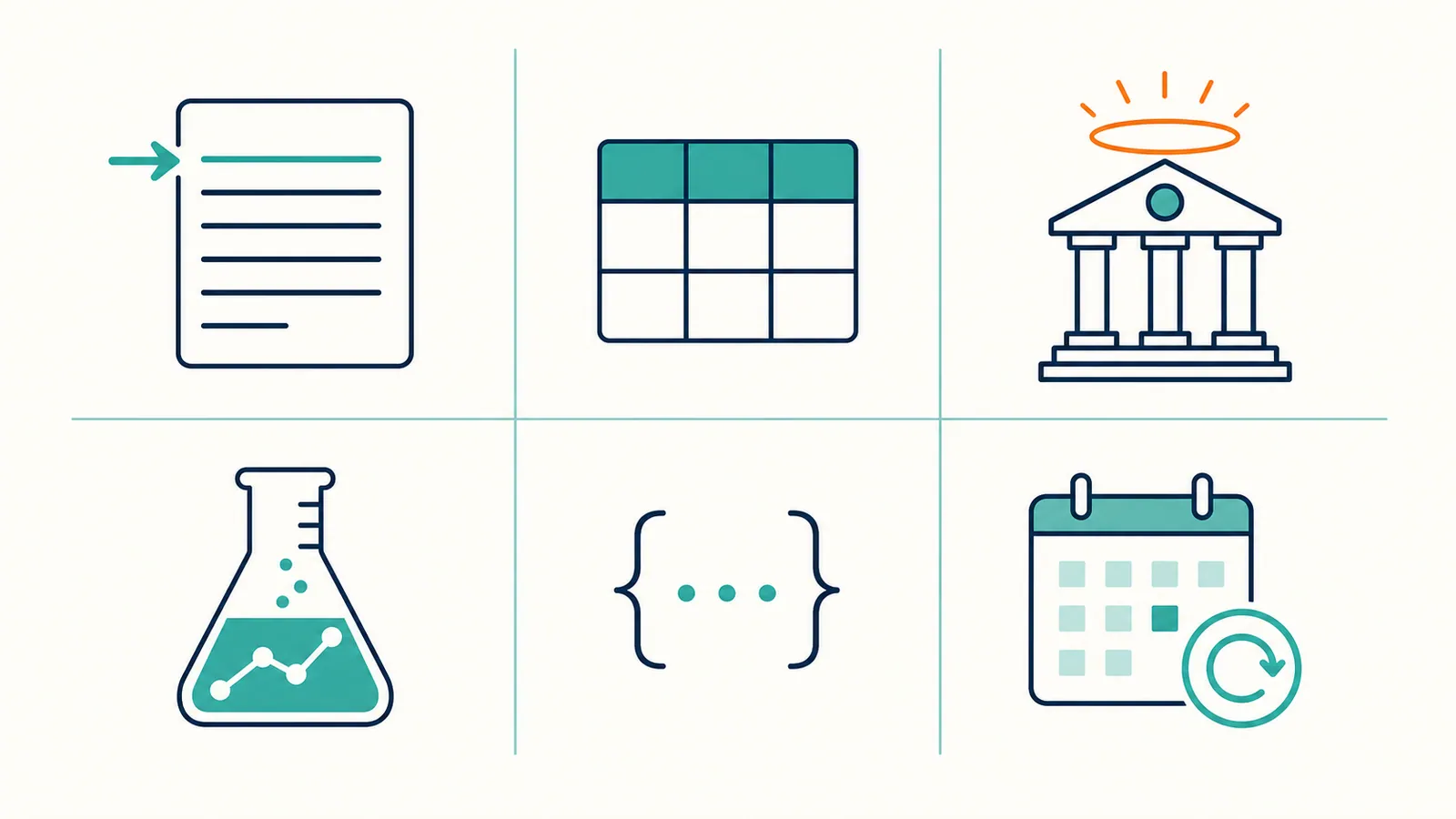
2. Structured, scannable content. Comparison tables, definition lists, numbered steps, and FAQ blocks get lifted into generative responses more often than plain prose. Think of these as machine-readable nuggets the AI can pull out cleanly.
3. Sources with strong entity signals. Brand recognition by the model matters. Sites that show up consistently in training data and across the web get cited more often. This is annoying for new sites and helpful for established ones. Build the brand. The brand builds the citations.
4. Original first-party data. Studies, benchmarks, and proprietary research get cited at higher rates. AI engines prefer not to summarize summaries. If you have original numbers. Even small ones from your own product. Surface them.
5. Schema markup that disambiguates. Article, Organization, Product, FAQ, and HowTo schemas help the model figure out what the page is. Validate them once. Then stop touching them.
6. Reasonable freshness. "Last updated" is a real signal. Stale content gets passed over. You do not need to refresh every page every quarter. But the pages you care about should never look two years old.
What does not seem to matter as much as people fear:
- Keyword density in the old sense. Stop counting.
- Word count for its own sake. Cover the topic. Stop padding.
- Author bio presence. It helps for human trust. It is rarely decisive for citation.
Part 3. How to optimize content for AI search
A practical structure that works across most informational pages in 2026:
- One-sentence direct answer, right under the H1 or first H2. Plain prose. No fluff.
- Short TL;DR with three to five bullets.
- Body content organized into six to ten H2 sections. Each section starts with the answer to the implicit question in its heading.
- One comparison table somewhere on the page if the topic invites comparison.
- One FAQ block with three to six questions and short answers.
- "Last updated" date in the body, refreshed when the content materially changes.
- Schema markup: Article + FAQPage where it applies + Organization for the site.
This is what we mean by SEO for AI search engines. A structure built to be readable by humans and liftable by generative systems.
A small worked example
Here is the kind of opening you want to avoid.
"Setting up technical SEO can feel overwhelming for new website owners. There are many things to consider, including site speed, mobile-friendliness, schema markup, and more. In this section, we will explore what technical SEO is and why it matters."
That paragraph says nothing. It is throat-clearing. The AI summarizer will skip it. So will the reader.
Now the same section written for both AI and humans.
"Technical SEO is the work of making your site easy for search engines to crawl, render, and index. It covers site speed, mobile responsiveness, indexability, structured data, and internal linking. Get these wrong and even great content will struggle to rank."
The second version answers the implied question in the first sentence. The AI summarizer will happily lift it. Humans will skim it faster. You can use the rest of the section to expand. But the answer goes up top.
A second worked example
A common pattern on listicle posts is to bury the picks under a long introduction. Here is what that usually looks like.
"There are many tools to choose from when it comes to AI SEO. Each has its strengths and weaknesses. In this article, we will look at the top contenders and help you decide which is right for you."
And here is the same section written to actually help.
"For most teams in 2026 the right AI SEO tool is Surfer for content briefs, Ahrefs for keyword data, and an agentic platform like RankHive for closing the loop on weekly work. The rest of this post explains why and when each one wins."
The second version commits to a position. AI engines lift positions. Readers reward positions. Vague intros help nobody.
Part 4. How to use AI software for SEO (without producing junk)
The category called AI software for SEO includes everything from a meta-description generator to a full agentic platform. The same principle applies across all of them: use AI to do the finding and the drafting. Keep the human in the judging and the approving.
Concrete things AI software is good at in 2026:
- Pulling and joining data. Search Console + GA4 + crawler data + keyword data is more work than it should be. AI is great at the join.
- Pattern matching. Striking-distance keywords, decaying pages, cannibalization. All things that fit a pattern an AI can spot reliably.
- Drafting structured artifacts. Titles, meta descriptions, FAQ blocks, schema, alt text. Bounded, repeatable formats.
- Refreshing existing content. AI can spot which paragraphs are out of date and draft updates.
- Internal linking suggestions. AI can read your entire site and propose contextually relevant internal links.
- Translating SEO into plain English. When a non-technical stakeholder asks why traffic dropped, AI can summarize the data in plain words faster than you can.
Concrete things AI software is not good at in 2026:
- Strategic site architecture decisions.
- Net-new long-form content without heavy editing.
- Tone-of-voice matching at scale.
- Anything involving legal, financial, or medical claims.
- Judgment calls about brand positioning, audience, or pricing.
Which of these you need depends on where your work gets stuck: finding problems, drafting fixes or shipping them. AI SEO Optimization Tools: Which Type to Choose sorts the category into five types and shows how to test one before you pay. For a ranked list of the AI SEO tools we compared, see Best AI SEO Tools in 2026.
The AI prompt template that works for SEO
Most teams overpay AI by under-prompting it. The format that consistently produces useful output for SEO tasks has four parts:
- Role. "You are an SEO editor reviewing a draft for a WordPress publisher."
- Context. Paste the page, the target keyword, the top three SERP titles, and the Search Console data for the URL.
- Task. "Suggest three rewrites for the title and meta description. The target query is X. The title must be under 60 characters."
- Constraints. "Do not use the words 'unlock' or 'unleash'. Use sentence case. Match the existing tone, which is direct and dry."
Save this template once. Reuse it for every page. The output quality will roughly double compared to a one-line prompt.
Part 5. How to use AI for SEO: a step-by-step walkthrough
Whether you are doing this manually with ChatGPT and a spreadsheet, or with an agentic tool like RankHive, the workflow is the same.
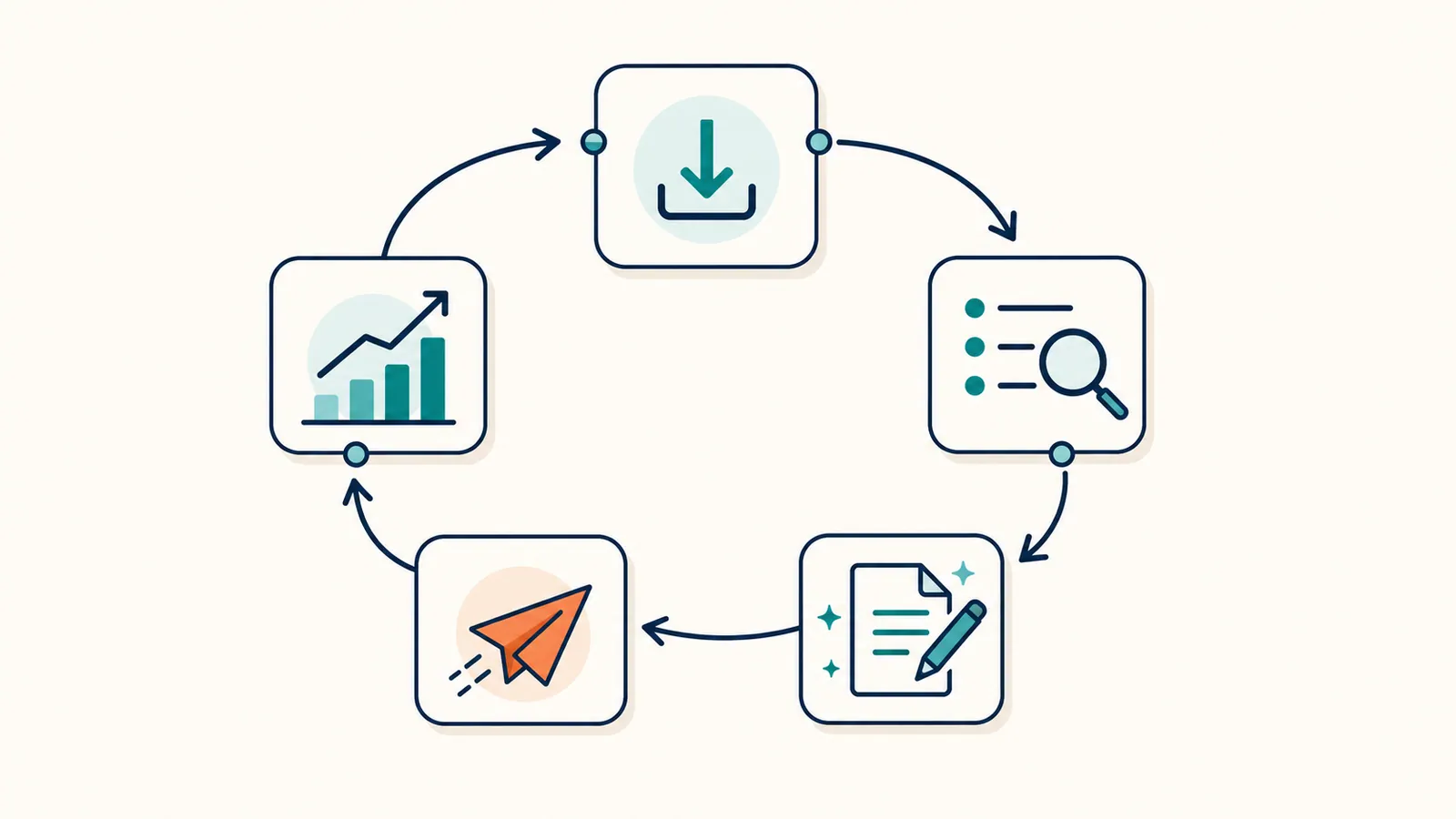
Step 1: Pull and triage your search data
- Export the last 90 days of Search Console data. Queries, pages, clicks, impressions, CTR, position.
- Identify striking-distance keywords: position 5 to 15, decent impressions, low CTR.
- Identify declining pages: queries where impressions or rank slipped over the last 30 days.
- Identify cannibalization: where two of your URLs are competing for the same query.
Step 2: For each opportunity, define the change
- Striking-distance: rewrite title and meta, add an internal link from a high-authority page, add the target term to an existing H2 if missing.
- Declining page: identify what changed. Stale content? SERP shift? Cannibalized by a newer post? Often the fix is content, not technical.
- Net-new opportunity: scope a new page, build a brief, assign a deadline. Do not commit to writing it until the brief is solid.
- Cannibalization: pick one URL to keep, redirect the other, consolidate the content.
Step 3: Use AI to draft
- Feed the page, the target keyword, the SERP context, and the change you want into your AI tool of choice.
- Generate three title options and three meta description options.
- Have it draft any new H2 sections, FAQ entries, or schema blocks.
- Edit. Pick. Tighten.
Step 4: Ship the change
- Update the page.
- Log the change: URL, date, change type.
- For agentic tools, this happens via the WP REST API after you approve.
Step 5: Measure
- After 14 days: check CTR and impression deltas.
- After 30 days: check rank and traffic deltas.
- Roll the results into your weekly digest.
Run it consistently for 90 days and you have enough measured changes to see what works on your site. Run it for 30 days and you will mostly see noise.
Part 6. A 90-day AI-for-SEO plan
Here is a 90-day plan you can follow. Adjust the timing if you are part-time on SEO. The phases do not move.
Days 1 to 14: instrument.
- Connect Search Console, GA4, and your CMS to your tool of choice.
- Set up a weekly automated dashboard. It does not have to be pretty. It has to update on its own.
- Run a baseline technical audit. Fix the critical issues. Broken canonicals, accidental noindex, crawl traps, slow pages.
- Document your top 50 URLs and what they target.
Days 15 to 30: optimize the top 20 pages.
- Pull the 20 pages with the most impressions.
- Rewrite titles and metas with AI drafts. Human approves each one.
- Add FAQ schema where it fits.
- Strengthen internal links into and out of each page.
- Ship and tag the changes.
Days 31 to 60: capture striking-distance keywords.
- Identify the 30 keywords in positions 5 to 15 with the best click potential.
- For each one, draft the change required to move it onto page one. Usually it is a title rewrite plus an added section in the body.
- Ship 5 to 10 changes per week.
- Track CTR and rank deltas weekly.
Days 61 to 90: refresh and new content.
- Refresh 10 pages that have decayed in the last six months.
- Plan and draft three to five new pieces of content targeting unclaimed keyword gaps. Use the keyword gap method in Keyword Gap Analysis.
- Lock in the weekly review cadence so the system runs after day 90 without you starting it again.
After day 90 you stop running this as a project and start running it as an ongoing workflow.
Part 7. How AI changes the day-to-day SEO job
It is worth spelling out what AI shifts in the hour-by-hour work of an SEO. Five concrete changes.
Keyword research takes a third of the time. Tools like Ahrefs and SEMrush still do the heavy lifting. AI on top of them clusters queries, drafts briefs, and explains intent. A three-day research sprint shrinks to a one-day sprint.
Briefing writers takes half the time. Plug the keyword, the top-three SERP, and your house style into a prompt. The first draft of the brief is decent. Edit. Send. The hour-long brief becomes a 20-minute brief.
On-page audits run in the background. AI agents can crawl your site weekly and flag changes that matter. You stop running quarterly audit projects and start receiving weekly tickets.
Stakeholder reporting writes itself. Pull the data. Ask the AI for a plain-language summary. Edit. Send. The "report Friday" deadline is no longer a Thursday-night event.
The skill that matters more is judgment. Tools do more of the doing. Humans do more of the deciding. The SEO who can pick the right opportunity from a list of fifty is worth more in 2026 than the SEO who can crunch the list manually.
Part 8. How to use generative AI for SEO (and how that differs from GEO)
Searchers asking how to use generative AI for SEO usually mean one of two things. This section separates them — conflating them is how teams waste a quarter on the wrong work.
Callout — two different questions:
- Generative AI for SEO = using ChatGPT, Claude, or similar to accelerate SEO tasks (research, drafting, clustering).
- SEO for generative AI search = optimizing so your brand appears in ChatGPT, Perplexity, and AI Overviews. That is Generative Engine Optimization (GEO), not the same workflow.
Using generative AI for SEO work (the practical workflow)
Keyword research: Feed your GSC export and competitor list into an LLM. Ask for clusters, question variants, and content angles. Validate every volume number in Ahrefs or Semrush — LLMs hallucinate search volume.
Briefs and outlines: Paste the target keyword, top three SERP URLs, and your brand voice guidelines. Get an H2 structure and FAQ questions. Human editor approves before writing starts.
On-page drafting: Generate title and meta variations, FAQ blocks, and intro paragraphs. Ship only after review. Never auto-publish raw LLM output.
Reporting: Export weekly GSC data. Ask the AI for a plain-language summary for stakeholders. Edit for accuracy.
Article SEO specifically: For how to use AI for article SEO, treat each article as a striking-distance optimization target. Use AI to draft added sections, improved intros, and schema-ready FAQ blocks — then measure CTR and position 14 days after shipping. See AI Content Optimization.
On-page SEO specifically: For how to use AI for on-page SEO, focus on elements the SERP rewards: title, meta, H1 alignment, internal links, and schema. An agent like RankHive automates this loop on WordPress; manual teams can use ChatGPT plus a checklist from How to Improve WordPress SEO.
What generative AI should not do unsupervised
- Invent keyword volume or difficulty data
- Publish full articles without human editing
- Rewrite brand voice without a style guide
- Bulk-change titles across the site without a review queue
For the full keyword research tutorial, see How to Use AI for Keyword Research.
Part 9. Frequently asked questions
Will AI replace SEO?
No. AI changed the surface and the tooling. The underlying job. Make your site easy to find, easy to understand, and worth citing. Is the same.
Will AI-written content rank?
It can. The Google line is consistent: quality matters, production method does not. AI-assisted content that genuinely helps the reader and reflects original insight tends to do fine. Mass-generated thin content does not.
Should I worry about AI Overviews stealing traffic?
Mixed. Informational queries that get summarized inside the AI Overview will see fewer clicks for everyone, including the cited sources. Cited sources still capture meaningful visibility and referral traffic. The mitigation is to be a cited source, and to target queries with stronger commercial intent where the AI Overview is less likely to short-circuit the click.
How do I get cited inside AI Overviews?
Same answer as Part 2. Direct-answer prose at the top of each section. Schema. Original data where you have it. Strong entity signals over time. Freshness signals on the pages you care about.
What is the single highest-leverage AI-for-SEO move I can make this week?
Rewrite the title and meta description of your top 10 pages by impressions. Use AI to draft. You pick. Ship within a day. Measure CTR 14 days later.
Is this different from SEO for AI Overviews specifically?
The fundamentals are the same. AI Overviews lean even harder on structured, direct-answer content and credible entity signals. See the structure recommended in Part 3.
Where does agentic SEO fit?
Agentic SEO is the natural endgame of the workflow above. Let an AI agent run the loop continuously and queue changes for your approval. See What Is Agentic SEO?.
Do I still need a keyword tool if I have AI?
Yes. AI is good at reasoning over keyword data. It is not a source of keyword data. You still need Ahrefs, SEMrush, Mangools, or Search Console to feed it the numbers.
How do I use AI for SEO optimization?
Follow the five-step loop in Part 5 of this guide: triage GSC data, define the change per opportunity, AI-draft the fix, ship with human approval, measure at 14 and 30 days. For WordPress sites, an agent like RankHive automates steps 1–4 on a weekly cadence. For generative AI workflows (ChatGPT/Claude drafting), see the section above on how to use generative AI for SEO.
Part 10. Common mistakes with AI for SEO in 2026
- Auto-publishing AI content. Still the fastest way to wreck a site. If a tool offers "auto-publish", treat that feature as off-limits.
- Treating AI as a writer rather than a researcher and drafter. AI is most useful in the brief → outline → first draft phase. Less so in the final polish phase.
- Ignoring first-party data. Search Console and analytics are the most valuable inputs you have. Generic keyword databases are noisier than your own data.
- Skipping the approval loop. If a tool ships changes without your review, it will eventually ship something you regret.
- Optimizing for AI Overviews while forgetting traditional SERPs. Most sites still get the majority of their traffic from traditional rankings. Both surfaces matter. Build for both.
- Buying five overlapping AI SEO tools. Pick one workflow. Use it for 90 days. Then evaluate gaps.
- Letting AI rewrite tone without supervision. Brand voice converges to a generic mean when you let AI run the polish step.
- Forgetting humans. A page that satisfies the AI summarizer but feels lifeless to a reader still loses long-term. Write for both.

Part 11. What to do this week (the 60-minute checklist)
You do not need to buy anything to start. You can run this in an hour with the tools you already have.
- 15 minutes: Export the last 90 days of Search Console queries. Sort by impressions. Find your 10 lowest-CTR pages.
- 20 minutes: Ask ChatGPT (or Claude, or whatever AI tool you use) to rewrite the title and meta description for each of those 10 pages. Use the prompt template from Part 4. Include the target query, the existing title, and the top three SERP titles.
- 15 minutes: Pick the best version of each. Edit the tone if needed. Make sure each title contains the target query in the first half.
- 10 minutes: Ship the changes inside your CMS. Note the change date in a simple log. A Google Sheet is fine.
Check back in 14 days. CTR usually moves first. If it does, you have validation that the pattern works on your site. Now expand it to the next 10 pages.
On a WordPress site, RankHive runs this checklist for you every week. It reads your Search Console data, finds the pages with impressions but weak CTR, and drafts a new title and meta description next to the current ones, with the query, position and impressions that prompted it. You approve, edit or discard each draft. Approved ones are written to WordPress and logged, so the change log keeps itself and any change can be reverted.
A note on the limits of this guide
Nothing here will help if the underlying business is wrong for SEO. If your buyers do not use search to find what you sell, AI does not change that. If your product has no story, AI will not invent one. SEO compounds on top of a real business. AI compounds on top of real SEO. The order matters.
Also: nothing here is a substitute for shipping. The biggest gap between sites that win at SEO and sites that struggle is not knowledge. It is execution. AI helps with execution. It does not replace it.
Related reading
- Best AI SEO Tools in 2026 (Compared and Ranked)
- What Is Agentic SEO? AI SEO Agents Explained
- What Is SEO for AI Called? LLM SEO, GEO and AEO
- How to Automate SEO: The Complete Playbook
- How to Use AI for Keyword Research
- Best SEO Tools for Agencies in 2026
- Best AI Visibility Platforms
- AI Content Optimization: A Practical Guide
- AI SEO Optimization Tools: Which Type to Choose
Your job is to run this loop every week: find the pages Search Console says are close, fix them, measure. Do it by hand with the checklist above, or let RankHive find those fixes on your WordPress site, draft them, and ship them after you approve them.